
Spinal Tension Release in Sydney: A Gentle Approach to Nervous System Health

What if that persistent tightness in your shoulders isn't just a physical knot, but your nervous system's way of recording every stressful deadline and sleepless night? In my 23 years of clinical practice, I've often noticed that the spine acts like a structural history book, holding onto tension long after a stressful event has passed. For those seeking spinal tension release in Sydney, it's important to understand that this tightness often signals a body stuck in a constant state of fight-or-flight. You might feel that no amount of stretching or rest quite reaches that deep-seated discomfort, leaving you unable to truly switch off after a long day.
It's a common experience to feel like your body is a machine that's simply run out of steam, but we believe your system has an incredible, untapped potential for harmony. We'll explore how a gentle, non-invasive approach to care may help restore your body's natural rhythm and improve your overall flexibility. This guide previews how supporting your nervous system can lead to a calmer, more regulated state of being, moving you away from persistent tension and toward a more vibrant life.
Table of Contents
Understanding Spinal Tension: Why Your Body "Holds On" in Sydney
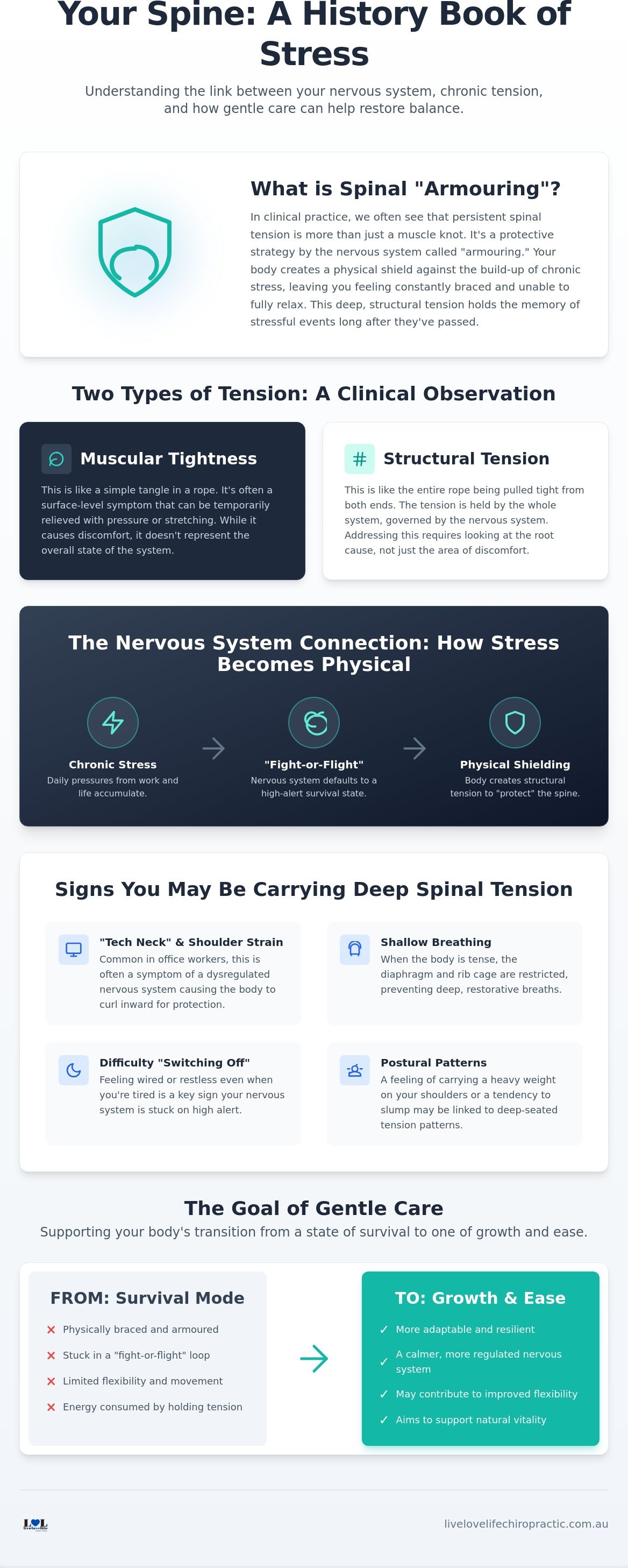
In clinical practice, I often observe that patients arriving from a high-pressure day in the CBD aren't just tired; their bodies are physically braced for impact. We see this frequently in our Woollahra community, where the fast-paced lifestyle can lead to a state of chronic physical bracing. One pattern I often notice is what we call "armouring." This isn't just a simple muscle knot; it's a deep, protective shielding of the spine that occurs when your body feels it needs to defend itself from ongoing stress.
Many people believe that tension is just a collection of "sore muscles" that can be rubbed away with a quick massage. However, for those seeking meaningful spinal tension release Sydney, it's vital to look at the underlying structural patterns. When your body is under constant pressure, your spine can become a record of that stress, holding onto tension long after the workday has ended. This physical "holding on" is a natural response, but it can become exhausting when the body forgets how to let go.
The Difference Between Muscular Tightness and Structural Tension
Imagine a rope. A muscle knot is like a small tangle in that rope that you can untie with a bit of pressure. Structural tension, however, is like the entire rope being pulled tight from both ends. No matter how much you rub the middle, the tension remains because the system is under high load. In my 23 years of experience, I've found that addressing the root cause requires looking at how the spine and nervous system are positioned, rather than just treating the surface-level discomfort.
Signs You May Be Carrying Deep Spinal Tension
Deep-seated tension often shows up in ways we've come to accept as "normal" in modern life. You might notice shallow breathing, a persistent "tech neck," or a general difficulty switching off once you get home to Paddington or Bellevue Hill. Over time, this constant state of alert may influence your posture patterns, making it feel like you're carrying a heavy weight on your shoulders. This physical bracing is directly tied to The Nervous System Connection, where your internal operating system stays on high alert, keeping your muscles in a state of perpetual readiness.
The Nervous System Connection: How Stress Becomes Physical
Your nervous system is essentially the "operating system" for your entire body. It manages everything from your heartbeat to the exact tone of your muscles. When life in Sydney gets hectic, your body often defaults to a "fight-or-flight" response as a survival mechanism. This process is deeply biological; you can read more about how your body reacts to stress to understand the hormonal shift that triggers this physical shielding. It's a protective measure that, when left unaddressed, can lead to a feeling of being permanently "on."
In my 23 years of practice, I often notice that the areas of highest tension are often where the body is trying to protect the nervous system from perceived stress. This "shielding" pattern isn't a mistake; it's your body's way of guarding its most vital communication highway. Our approach to spinal tension release Sydney focuses on helping your system realize the threat has passed. This aims to support the body’s natural transition from a state of survival into a state of growth and ease.
Clinical Observations: Patterns of Tension in Sydney Professionals
One pattern we frequently see in Woollahra and the surrounding Eastern Suburbs is the "Upper Cross" pattern. This is particularly common among office workers who spend hours at a desk. In these cases, neck and shoulder tension isn't just a localized muscle issue. It's often a secondary symptom of a nervous system that has become dysregulated, causing the body to physically curl inward for protection. This bracing can lead to a cycle of fatigue that rest alone doesn't seem to touch.
Why Traditional "Cracking" Might Not Be Necessary for Everyone
Many people expect forceful adjustments, but a system that's already on high alert may perceive a loud "crack" as another threat. This can sometimes trigger a defensive reflex, causing the body to tighten further. We find that a gentler touch can "invite" the system to relax rather than forcing it. If you feel your body is ready to move toward a more balanced state, you might consider an initial nervous system assessment to see how your body is currently processing stress.
Gentle Spinal Tension Release Sydney: The Network Spinal Approach
Network Spinal care represents a gentle, non-invasive method that differs significantly from traditional manual adjustments. Instead of forceful movements, we use precise, light touches known as "entrainments." This approach aims to support your body's innate ability to self-correct and release its own deep-seated tension. It's about teaching the system to find a new way of being rather than just forcing a change from the outside. In clinical practice, I've seen that when we provide the right cue at the right time, the body's capacity for spinal tension release Sydney is far greater than what any external force can achieve.
Your journey with us begins with a comprehensive Initial Consultation. During this visit, we perform a detailed neurostructural examination to understand how your body is currently processing the physical signs of stress. This assessment helps us map out the patterns of tension that may be influencing your posture and energy levels. Because our methods are low-force, they are suitable for everyone in our Eastern Suburbs community, from infants to seniors.
What to Expect During a Gentle Release Session
Our sessions are held in a calm, nurturing environment designed to help you feel safe and supported. During a session focused on spinal tension release Sydney, I use specific gentle touches along the spine to cue your nervous system to let go of its defensive bracing. Many people experience a sense of deep relaxation and notice their breathing becomes fuller and easier almost immediately. It’s a rhythmic, peaceful process that feels more like a collaborative partnership than a clinical procedure.
The Long-Term Benefits of a Regulated Nervous System
While immediate ease is a wonderful experience, the true power of this care lies in long-term regulation. A balanced nervous system often leads to improved energy levels, better sleep, and a much higher resilience to the daily pressures of Sydney life. By moving beyond just symptom management, Network Spinal care aims to help you live a life characterized by ease and vitality. One pattern I often notice is that as the spine becomes more flexible, an individual's capacity to handle life's challenges often expands as well.
Embracing a Future of Ease and Vitality
Your body has an incredible, untapped potential for harmony. Throughout this guide, we've looked at how the fast-paced lifestyle of the Eastern Suburbs can lead to a protective armouring of the spine. We've also explored how your nervous system acts as the central gateway to releasing this physical bracing. By choosing a gentle, low-force approach, you're moving away from the idea of being broken and toward a partnership that values your body's innate wisdom and capacity for growth.
In our Woollahra practice, we use Network Spinal care to support your system's ability to self-correct. This gentle spinal tension release Sydney aims to help you transition from survival mode into a state of ease and resilience. Whether you're a busy professional in Paddington or a parent in Bellevue Hill, this care is designed to meet you where you are. We use over 23 years of clinical experience to guide your journey toward a more regulated and vibrant life.
It's time to view your health as a positive lifestyle choice rather than a medical necessity. We're honored to be trusted by families across Sydney’s Eastern Suburbs and look forward to helping you restore your body's natural rhythm. Your path to a calmer, more energetic future starts with a single, gentle step.
Frequently Asked Questions
How is gentle spinal tension release different from a massage?
Gentle spinal tension release Sydney differs from massage by addressing the nervous system's control over muscle tone rather than just the soft tissue. While a massage provides wonderful temporary relief for tight muscles, our approach focuses on the "operating system" that keeps those muscles in a state of bracing. By using precise, light touches to cue the spine, we encourage your body to self-correct the underlying structural patterns that cause chronic tension.
Does Network Spinal care involve any cracking or popping of joints?
Network Spinal care doesn't involve any forceful cracking or popping of the joints. We utilize a low-force method that relies on precise, gentle touches called entrainments to communicate with your nervous system. In clinical practice, I've found that this nurturing approach is often more effective for a system that's already on high alert. It invites your body to relax and reorganize without triggering the defensive reflexes often associated with traditional manual adjustments.
How many sessions will I need before I feel a difference?
Every individual's journey is unique, but many people experience a noticeable shift in their breathing or a sense of ease within the first few sessions. Achieving a more regulated nervous system is a cumulative process that builds with each visit. During your initial assessment, we'll create a personalized plan that reflects your structural history and wellness goals. Our focus is on supporting your body as it moves toward a more balanced and energetic future.
Is this approach safe for people with chronic pain or previous injuries?
This approach is exceptionally safe for individuals with chronic pain or previous injuries because it's non-invasive and uses no forceful manipulation. By avoiding high-velocity adjustments, we ensure that sensitive or compromised areas of the spine aren't placed under unnecessary stress. We always begin with a thorough neurostructural examination to understand your body's specific history. This allows us to provide a safe, supportive environment for spinal tension release Sydney that respects your body's current capacity.


Comments